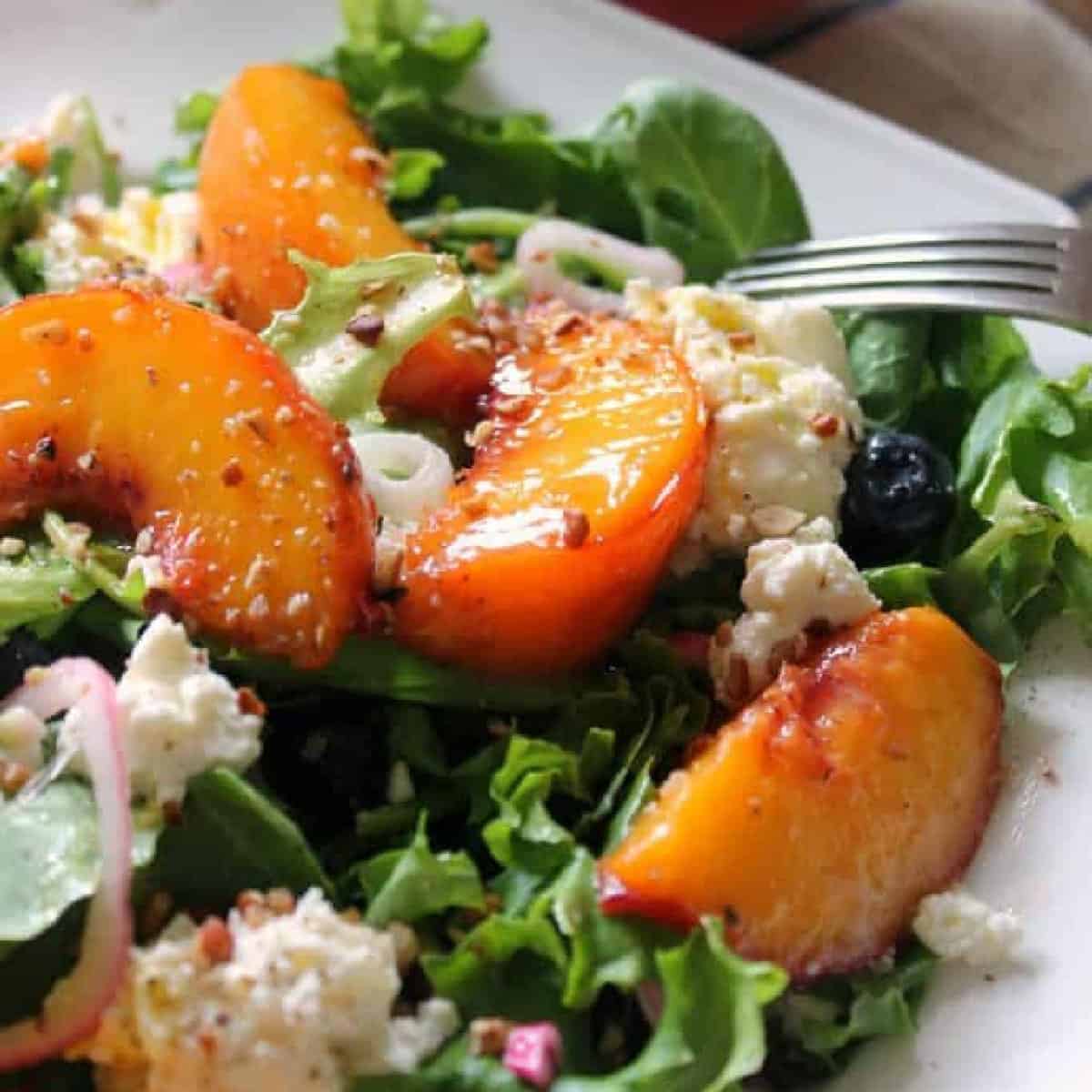

In a season of rich foods, hearty casseroles and showstopping desserts, salads can often seem like an afterthought.
If you’re looking for a salad that can hold its own at your fall dinner party or holiday table, you’ve come to the right place!
Here, you’ll find my favorite company-worthy fall salads that won’t fall flat. Filled with seasonal ingredients like squash, pears, apples, Brussels sprouts and tasty additions like toasted nuts and creamy cheeses, these salads might just steal the show!
Autumn Harvest Salad with Warm Goat Cheese
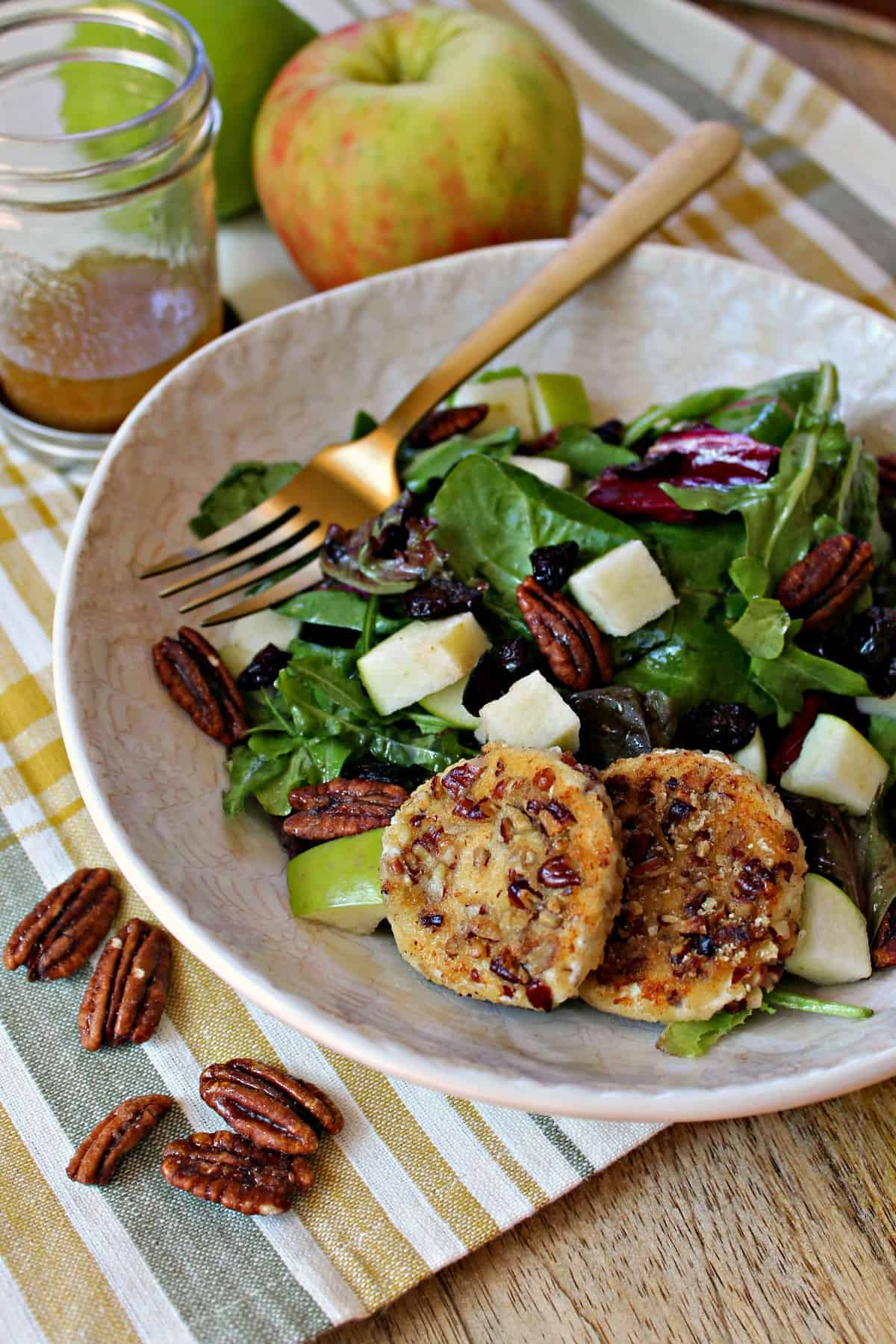
If I were choosing one salad specifically for a fall dinner party, this would probably be it.
Autumn Harvest Salad with Warm Goat Cheese combines crisp greens, apples, dried cranberries and candied pecans with pecan-crusted goat cheese medallions and apple cider vinaigrette.
Why it works for hosting: Most of the components can be prepped ahead, then the goat cheese is pan-fried just before serving.
Best for: Dinner parties, Thanksgiving or serving as a plated first course.
Maple-Roasted Acorn Squash & Ricotta Salad
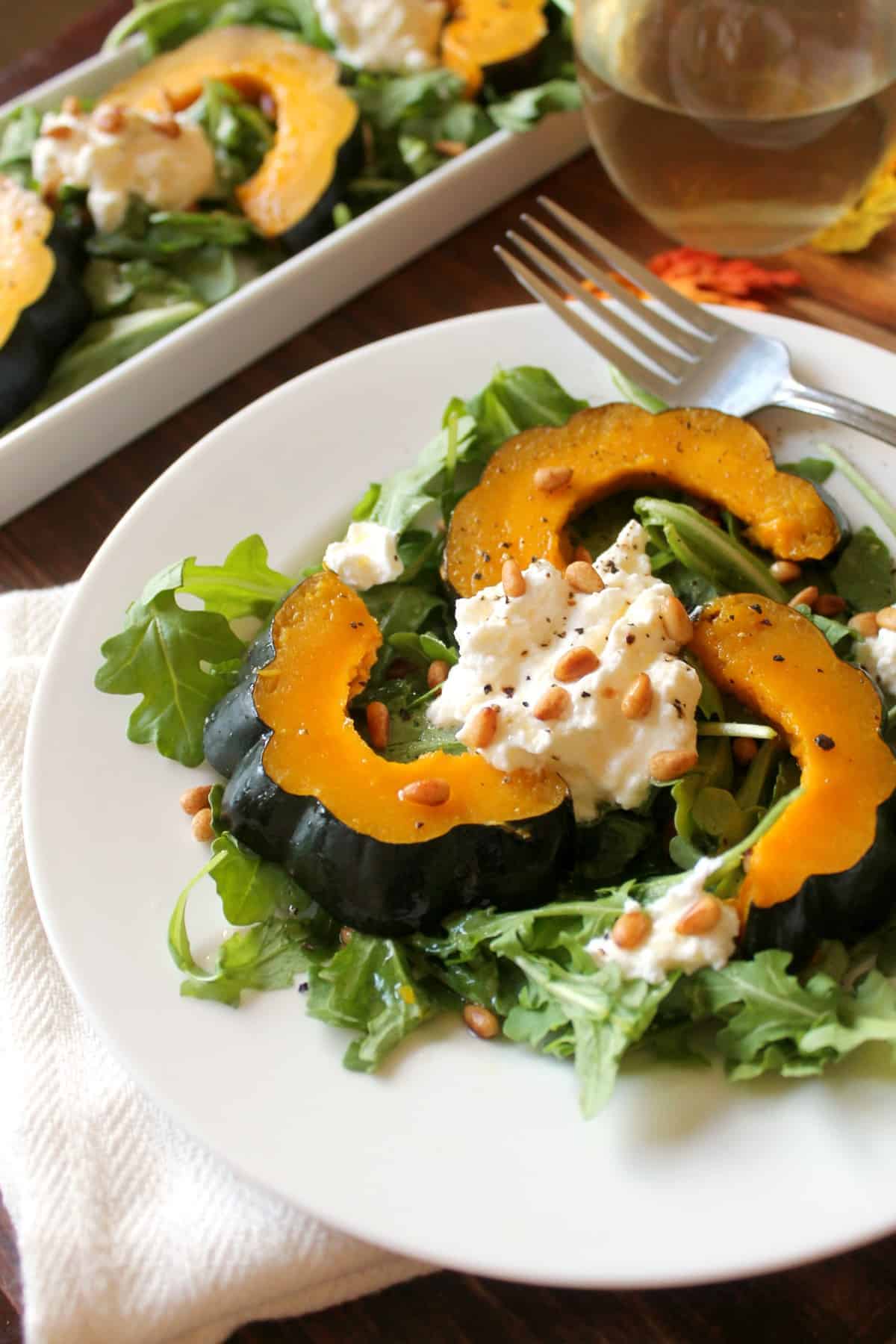
This Maple-Roasted Acorn Squash & Ricotta Salad has the kind of visual appeal I love for a holiday spread: peppery arugula, maple-roasted squash, creamy ricotta and toasted pine nuts finished with a sweet-tangy apple cider vinaigrette.
The roasted squash gives the salad enough substance to sit comfortably alongside richer fall dishes, while the arugula keeps it from feeling heavy.
Why it works for hosting: The squash can be roasted and the dressing made ahead, leaving only a quick assembly before serving.
Best for: Thanksgiving, fall dinner parties and holiday buffets.
Roasted Acorn Squash & Pear Quinoa Salad
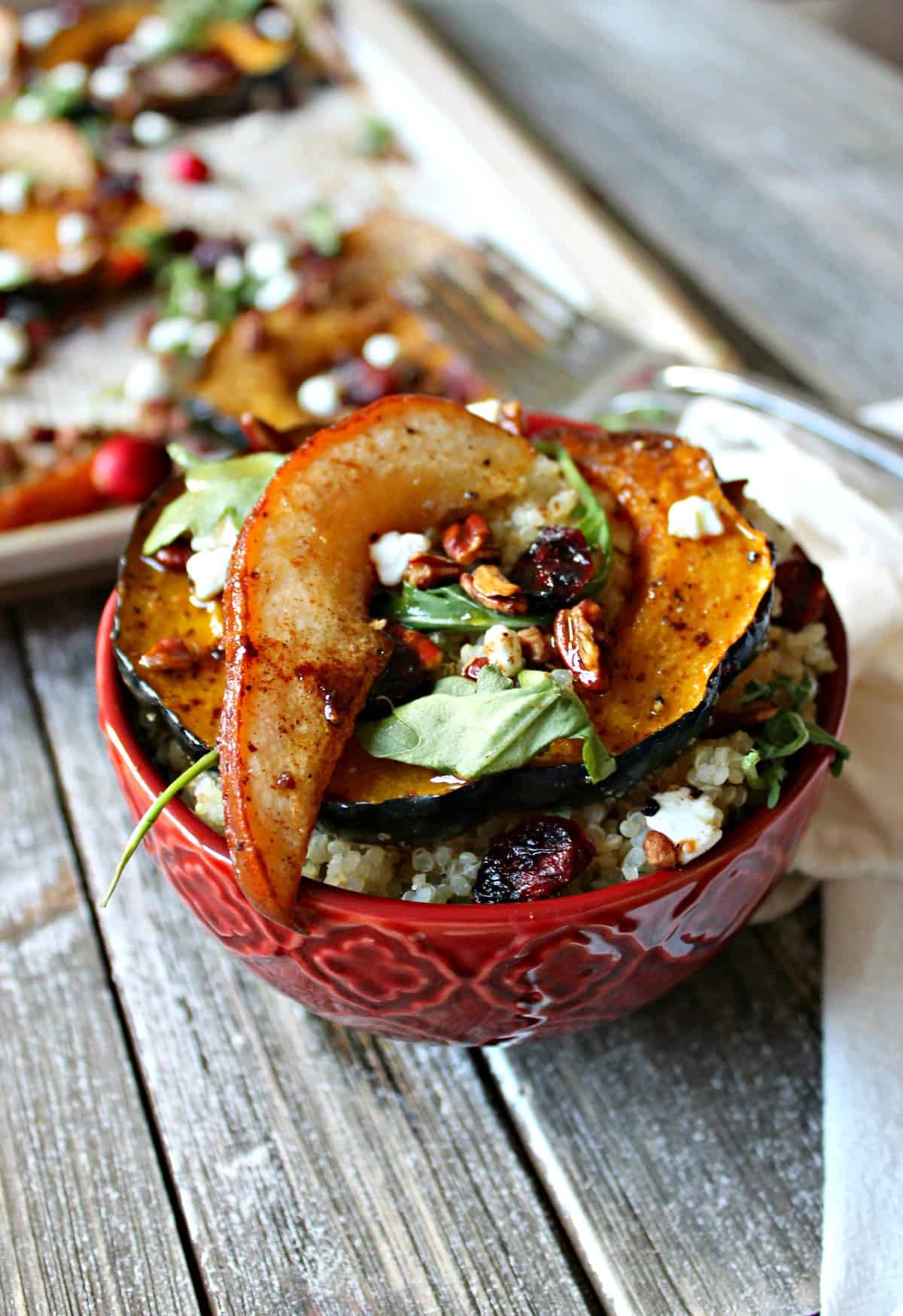
For something substantial enough to double as lunch or a lighter main course, make Roasted Acorn Squash & Pear Quinoa Salad.
Spiced acorn squash and pears are paired with quinoa, dried cranberries, toasted nuts, goat cheese and arugula, then finished with a vanilla-scented vinaigrette.
This one is especially useful when you want a salad that doesn’t wilt into the background of a buffet.
Why it works for hosting: The roasted components and quinoa give it staying power, so it’s less delicate than a traditional leafy salad.
Best for: Buffets, Friendsgiving, lunch gatherings or vegetarian-friendly menus.
Kale & Brussels Sprout Salad
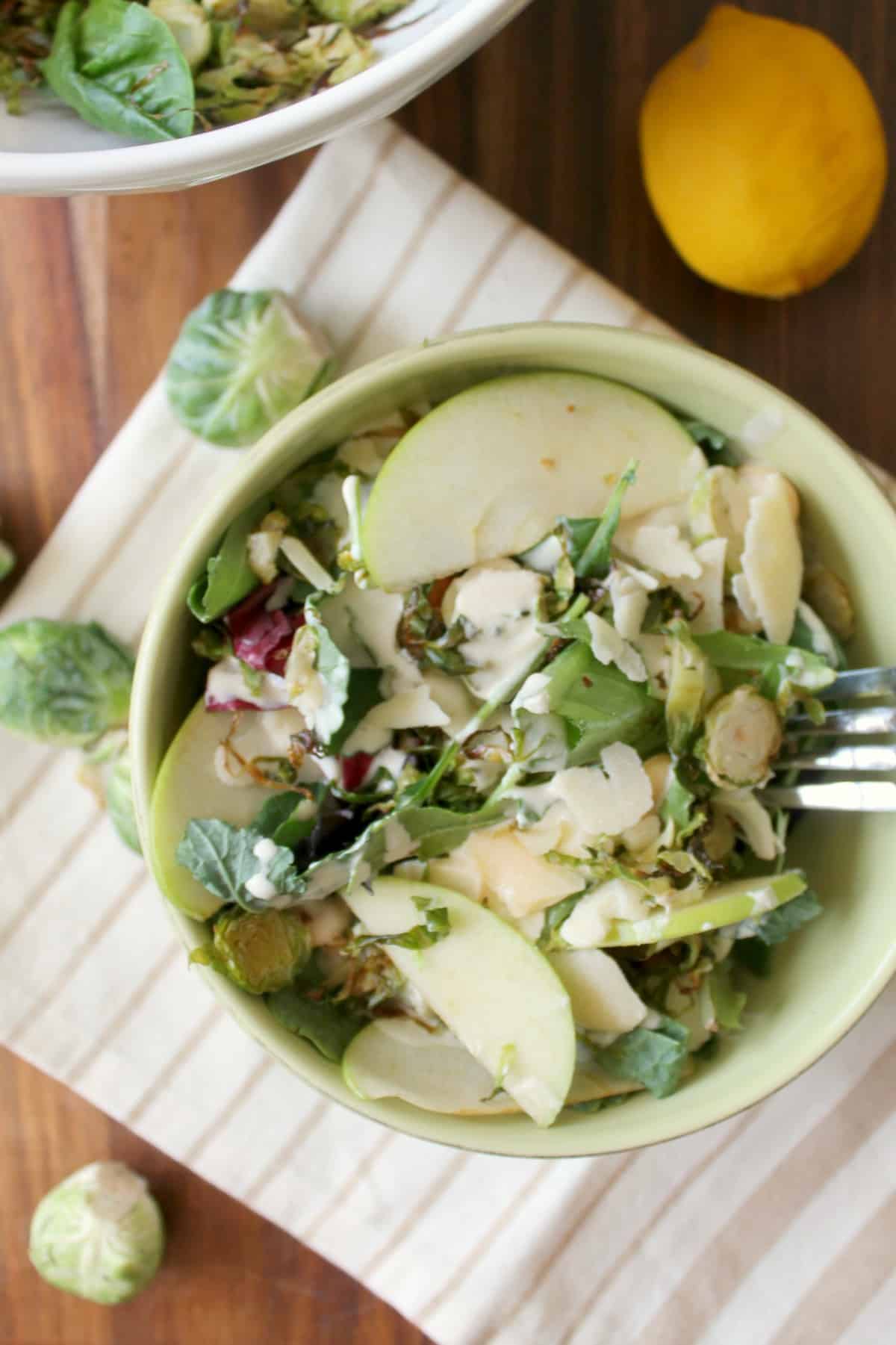
When the rest of dinner is especially rich, Kale & Brussels Sprout Salad is the kind of thing I want alongside it.
Baby kale, roasted shaved Brussels sprouts, tart Granny Smith apple, Marcona almonds and Pecorino or Asiago are finished with a lemon-tahini dressing.
The tart apple and lemony dressing give it enough brightness to balance creamy casseroles, roasted meats or heavier holiday sides.
Why it works for hosting: Kale is sturdy, and the roasted Brussels sprouts make the salad feel distinctly seasonal without relying on squash.
Best for: Thanksgiving, holiday meals or any rich fall menu that needs something fresh.
Butternut Squash Caprese Salad
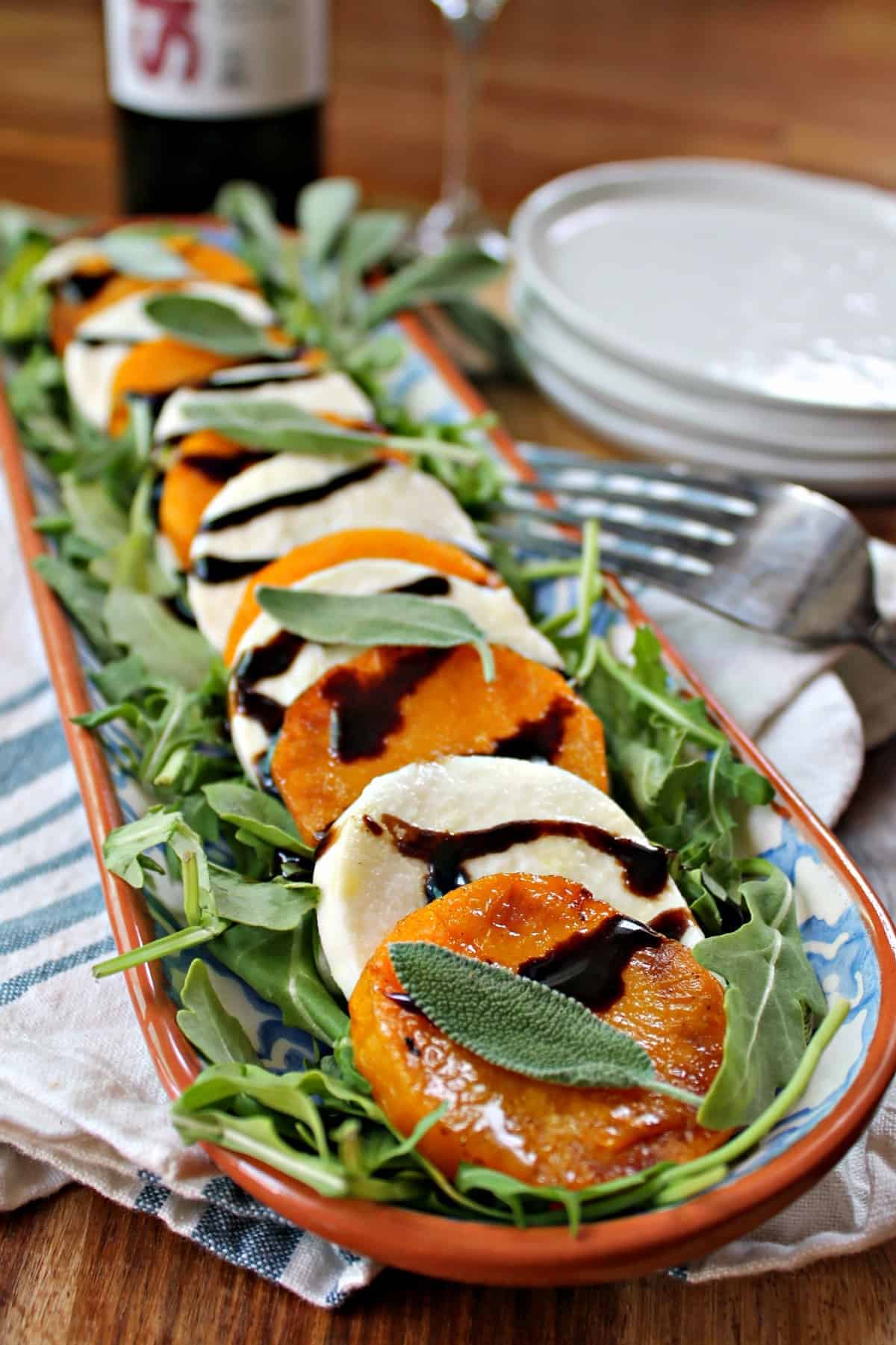
If you like the idea of a fall salad but don’t want to chop and toss a dozen ingredients, Butternut Squash Caprese Salad is a great option.
Roasted butternut squash stands in for tomatoes and is layered with fresh mozzarella, sage and balsamic glaze for an autumn take on classic Caprese.
It’s simple, visual and easy to serve on a platter.
Why it works for hosting: It looks polished with very little assembly and works equally well as a salad, side dish or appetizer.
Best for: Casual gatherings, fall aperitivo, Thanksgiving or buffet-style entertaining.
Pumpkin-Spiced Delicata Squash & Chickpea Salad
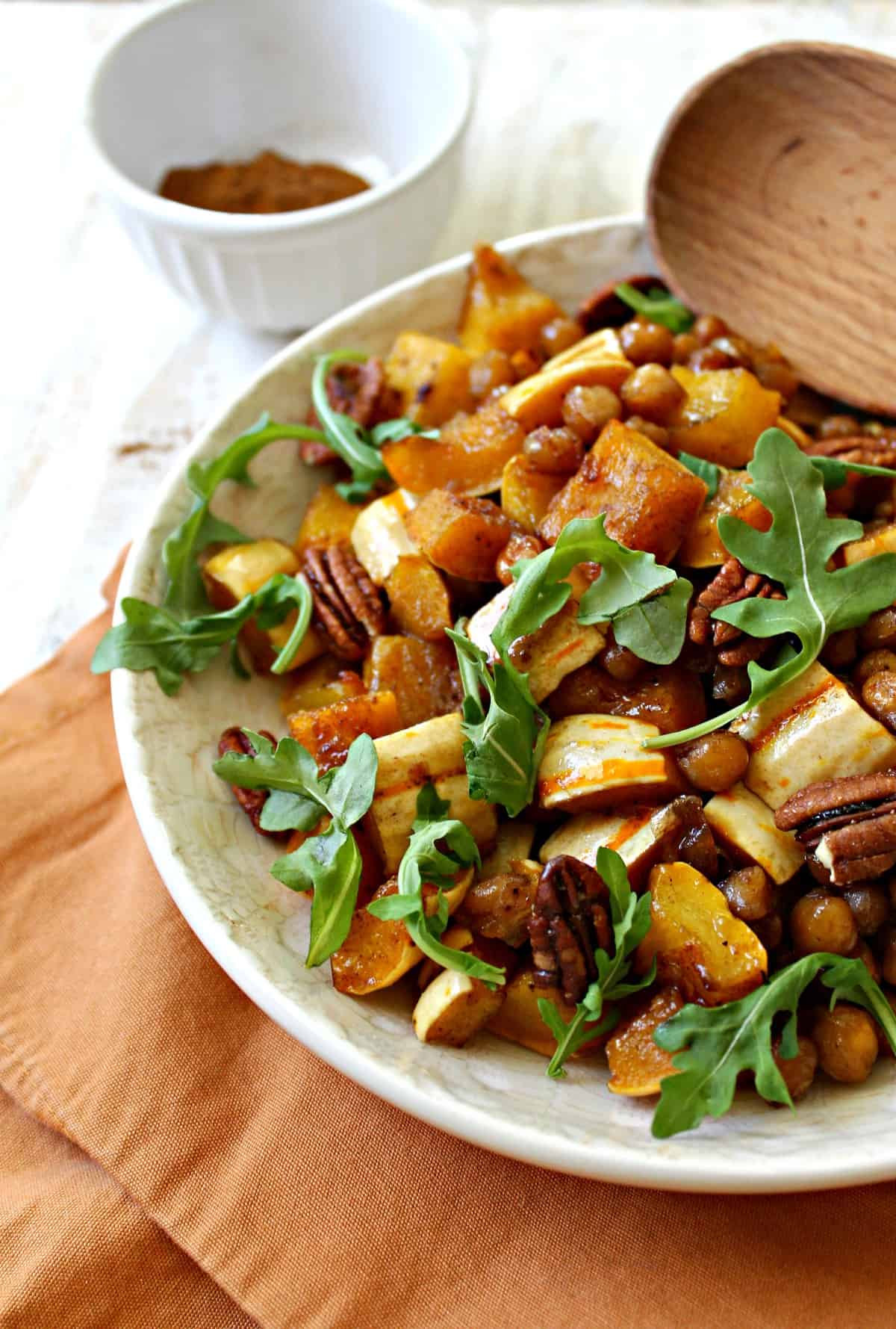
Pumpkin-Spiced Delicata Squash & Chickpea Salad is one of the easiest ways to turn roasted vegetables into something that feels like a complete seasonal dish.
Delicata squash and chickpeas are roasted together with maple syrup and pumpkin spice, creating caramelized edges and plenty of warm fall flavor. Delicata is also especially easy to work with because the skin doesn’t need to be peeled.
Why it works for hosting: Much of the work happens on one sheet pan, and the salad is hearty enough to hold its own on a buffet.
Best for: Thanksgiving, vegetarian menus, casual fall dinners or potlucks.
How to Choose the Right Fall Salad for Your Menu
A good salad should balance the rest of the meal rather than compete with it.
If you’re serving something rich and creamy, choose:
- Kale & Brussels Sprout Salad
- Autumn Harvest Salad with Warm Goat Cheese
If the main course is simple or lighter, choose something heartier:
- Roasted Acorn Squash & Pear Quinoa Salad
- Pumpkin-Spiced Delicata Squash & Chickpea Salad
If you want the salad to feel especially pretty on the table, choose:
- Maple-Roasted Acorn Squash & Ricotta Salad
- Butternut Squash Caprese Salad
And if you’re serving a lot of appetizers or sides, you probably don’t need a complicated salad at all. Something crisp, acidic and seasonal is usually enough.
Make-Ahead Tips for Fall Salads
Salad is one of those dishes that can either make hosting easier or create one more last-minute task, depending on how you prep it.
My general rule is to prepare the components ahead but wait to assemble until close to serving.
A few things that can usually be done early:
- Roast squash or Brussels sprouts
- Cook quinoa (baked quinoa is my favorite!) or other grains
- Make the dressing
- Toast nuts
- Crumble or portion cheese
- Bread goat cheese medallions
Then, closer to serving:
- Slice fresh apples or pears
- Toss the greens
- Add dressing
- Cook anything meant to be served warm
- Add crunchy toppings last
That keeps the salad fresh without leaving you with a dozen tasks while guests are arriving.
Serve It in Style
Whenever possible, I prefer serving fall salads on a wide, shallow platter instead of in a deep bowl.
A platter lets the seasonal ingredients stay visible — roasted squash, sliced pears, apples, goat cheese and nuts — instead of disappearing underneath the greens.
For a buffet, keep the serving utensils nearby and add a small pitcher of extra dressing on the side rather than overdressing the salad.
And if the salad contains a warm element, like goat cheese or roasted squash, add it last so guests get the texture and temperature contrast that makes the dish interesting.